90-Second Read: Army parachutes onto remote island to help Briton with suspected Hantavirus
Editorial voice
Noah Davidson
Published
Published May 13, 2026
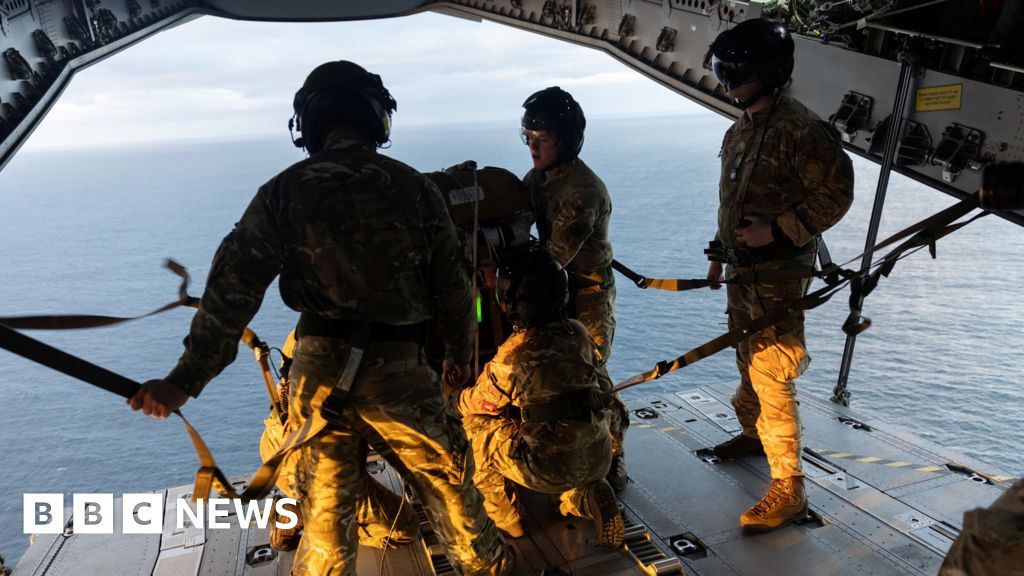
British Army medics have parachuted onto the remote Atlantic island of Tristan da Cunha to help a British national with suspected Hantavirus. Brig Cartwright said the operation was not just about the man suspected of having Hantavirus but also supporting the other people on the island, especially those who may have had contact with him. The WHO has confirmed that as well as the six confirmed cases, there are two with suspected Hantavirus, which includes the British man on Tristan da Cunha. The man left MV Hondius, the cruise ship hit by a deadly outbreak of the virus, in mid-April at Britain's most remote inhabited overseas territory, where he lives.
Three people have died in the outbreak, including two who were confirmed to have had Hantavirus. Most Hantaviruses do not pass from person to person, but the Andes strain, identified in a number of people who had been on the Dutch cruise ship, does. Meanwhile two Britons are voluntarily self-isolating at home in the UK, having disembarked the vessel at St Helena on 24 April before the first case of Hantavirus was confirmed. Almost a month after the first death onboard the MV Hondius, the vessel has now arrived in Tenerife, where authorities are helping more than 100 people disembark to be repatriated.
The specialist team parachuted onto Tristan da Cunha, a remote British overseas territory, to treat them. Oxygen was also dropped from an RAF A400M on Saturday, with supplies at a "critical level" on the island, the Ministry of Defence (MoD) said. A team of six paratroopers and two medical clinicians from 16 Air Assault Brigade parachuted on to Tristan da Cunha, an archipelago in the South Atlantic Ocean considered to be one of the world's most remote inhabited islands. An RAF A400M transport aircraft, supported by an RAF Voyager, flew from RAF Brize Norton in Oxfordshire to Ascension Island, in the South Atlantic Ocean, before heading to Tristan da Cunha.
Average wind speeds over the island are often over 25mph (40km/h), the MoD said. Brig Cartwright said the parachutists were dispatched from an aircraft about 5km (3.1 miles) over the South Atlantic Ocean, before turning in the wind and blowing backwards over the island and then carrying out a landing on its edge. Two of the paratroopers jumped in tandem with an intensive care nurse and intensive care doctor, who will provide help to the island, which usually has a two-person medical team.
Source reference
Original reporting
Based on reporting from BBC. Read the original source for full details.
Source published May 10, 11:02 AM EDT. Hantavirus Now reviewed reporting from BBC and summarized the key points below.
Read original article