90-Second Read: Hantavirus cluster linked to cruise ship travel, Multi-country
Editorial voice
Noah Davidson
Published
Published May 18, 2026
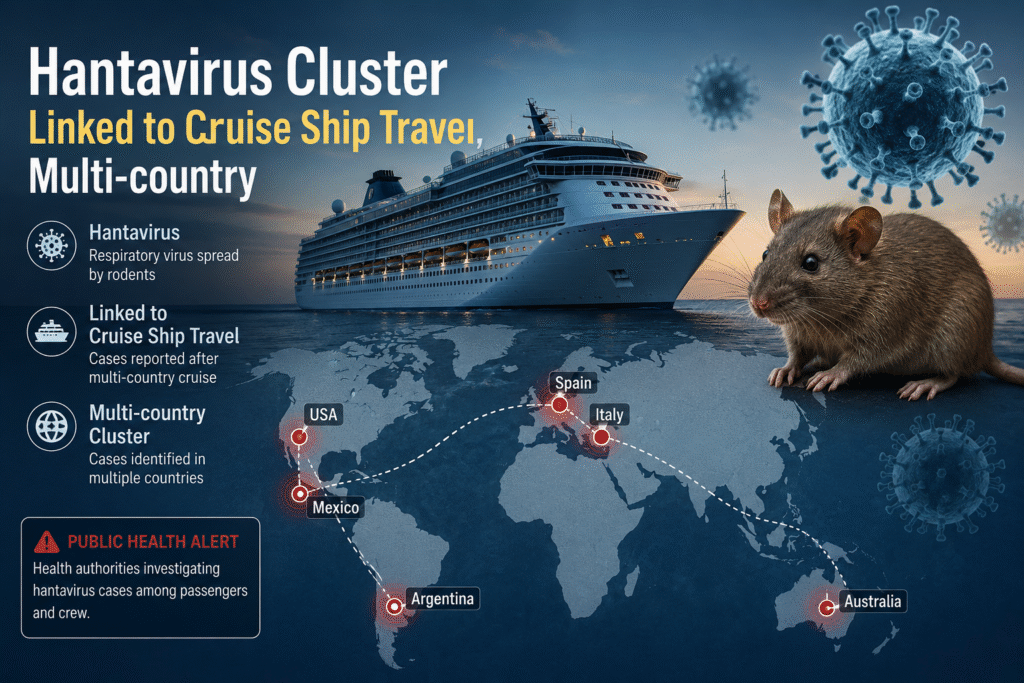
This is the third Disease Outbreak News report on the Hantavirus cluster, following the notification to the World Health Organization (WHO) on 2 May 2026 of severe respiratory illness cases aboard MV Hondius, a cruise ship. Epidemiological curve of Andes Hantavirus cases (n = 11) reported to WHO as of 13 May 2026, 17:00. Follow-up and contact tracing for all contacts of Hantavirus cases linked to the cruise ship is ongoing. Since the last DON was published on 8 May, two additional confirmed cases were reported from France and Spain.
Passengers who travelled on flights who may have had exposure to subsequently confirmed cases have been identified and contacted. Hantaviruses are associated with two major distinct clinical syndromes in humans: HPS predominantly reported in the Americas, and hemorrhagic fever with renal syndrome (HFRS), mainly reported in Europe and Asia. In the European Region, 1885 Hantavirus infections causing HFRS were reported in 2023 (0.4 per 100 000), marking the lowest rate observed between 2019 and 2023. Hantavirus cardiopulmonary syndrome (HCPS), also known as Hantavirus pulmonary syndrome (HPS), is a zoonotic, viral respiratory disease caused by Hantaviruses of the genus Orthohantavirus, family Hantaviridae, order Bunyavirales.
Human Hantavirus infection is primarily acquired through contact with the urine, faeces, or saliva of infected rodents or by touching contaminated surfaces. While there are no licensed treatment nor vaccines for Hantavirus infections, early supportive care and immediate referral to a facility with a complete ICU can improve survival. Since Hantavirus reservoirs are sylvatic rodents, transmission can occur when people come into contact with rodent habitats. Risk communication and community engagement (RCCE) interventions should prioritize transparent, timely, and culturally appropriate communication to raise awareness of Hantavirus transmission risks.
Although ribavirin has shown efficacy against Hantavirus haemorrhagic fever with renal syndrome, it has not demonstrated effectiveness for HPS and is not licensed for either treatment or prophylaxis of Hantavirus pulmonary syndrome. Extracorporeal membrane oxygenation support improves survival of patients with severe Hantavirus cardiopulmonary syndrome. The ship left the Canary Islands on 11 May and is sailing to the Netherlands, with 25 crew members remaining on board, along with two Dutch health and care workers to conduct their health monitoring and provide any healthcare that may be necessary.
Source reference
Original reporting
Based on reporting from The Katy News. Read the original source for full details.
Source published May 18, 12:31 AM EDT. Hantavirus Now reviewed reporting from The Katy News and summarized the key points below.
Read original article