90-Second Read: Hantavirus in Paraguay: The current situation
Editorial voice
Lucas Ferreira
Published
Published May 10, 2026
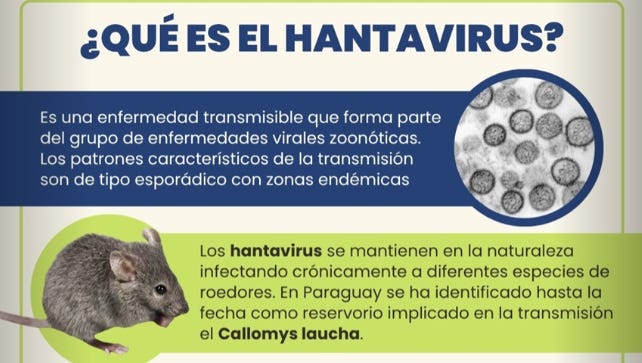
Between 2020 and 2025, 110 cases of Hantavirus were reported in Paraguay, 73% of which originated in the department of Boquerón. The cases were distributed as follows: Boquerón (80), Presidente Hayes (20), Alto Paraguay (8), and isolated cases in Concepción and Itapúa. Hantavirus persists in nature, chronically infecting various rodent species. In Paraguay, the Western Region, or Chaco, is considered an area of confirmed rodent transmission of the virus. However, isolated cases have also been reported in departments of the Eastern Region, such as Concepción and Itapúa.
Most cases affect young adult males, due to risky activities in rural and wild environments. Eighty-five percent of the cases were in men, and the most affected age group was 20 to 39 years (62%). In 2026, 3 cases have been confirmed, all in men: two from Boquerón (20-39 years old) and one from Presidente Hayes (15-19 years old). The virus is shed by rodents through blood, secretions, and excreta (urine and feces), and is transmitted to humans mainly through inhalation of contaminated aerosols. It can also enter the body through wounds on the skin, mucous membranes, or rodent bites.
In Paraguay, the primary identified reservoir is the house mouse (Callomys laucha). Rural activities, construction, agriculture, livestock farming, adventure tourism, camping, fishing, and hunting in areas inhabited by these rodents are risk factors. Person-to-person transmission has only been documented for the Andes virus, which is not present in Paraguay. Symptoms include sudden onset of fever, headache, muscle pain, weakness or fatigue, and in some cases, vomiting and diarrhea. The disease can range from mild to severe, with a high mortality rate.
The incubation period in humans ranges from 4 days to 6 weeks, with an average of 15 to 20 days. Infected rodents can shed the virus for extended periods. Management is supportive, generally in medical centers with access to Intensive Care Units (ICUs). Timely access to the ICU is essential to prevent complications.
Source reference
Original reporting
Based on reporting from Outbreak News Today. Read the original source for full details.
Source published May 10, 6:37 PM EDT. Hantavirus Now reviewed reporting from Outbreak News Today and summarized the key points below.
Read original article