90-Second Read: Planes, trains and pandemics: Lessons from COVID-19 about travel risks posed by Hantavirus and Ebola
Editorial voice
Malik Thompson
Published
Published May 26, 2026
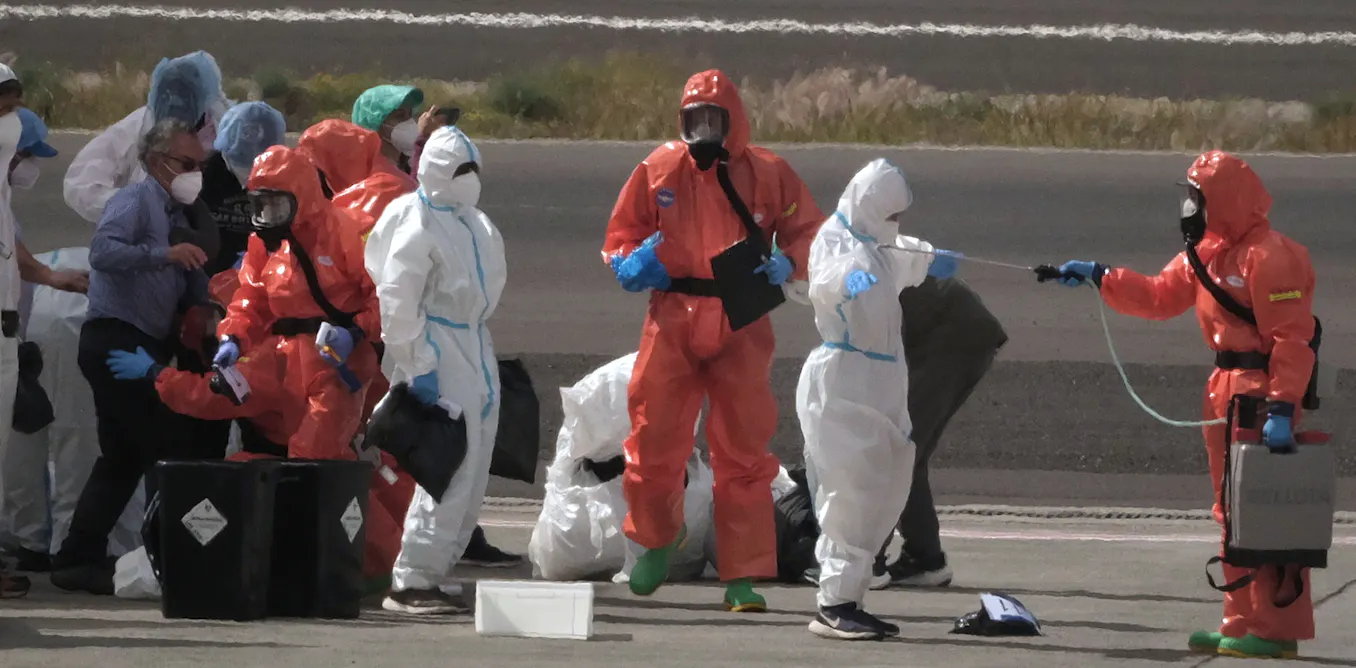
Recent outbreaks of Hantavirus and Ebolavirus raise concerns about risks linked to travel, with responses varying between countries. With the upcoming World Cup poised to drive a surge in Canadian tourism, recent Hantavirus and Ebola virus outbreaks remind us of the need to effectively manage travel-related public health risks in a world on the move. Recent outbreaks of Hantavirus among passengers of the MV Hondius cruise ship, and Ebola in the Democratic Republic of the Congo (DRC) and Uganda, have raised concerns about risks associated with travel. As researchers on the Pandemics and Borders Project, we have spent the past six years studying the use of international travel measures in response to the COVID-19 pandemic and other global public health emergencies.
With 13 reported cases, including three deaths to date, the recent Hantavirus outbreak was reported to the World Health Organization (WHO) on May 2, following the medical evacuation of a passenger from the MV Hondius. Rapid response to travel-related risks of Hantavirus was adequately resourced, globally co-ordinated and appears so far to have balanced the need for protecting the health of MV Hondius passengers while preventing the wider health-harming spread of disease. As a result, response to this outbreak is in some ways " back at square one." Amid evolving evidence on best practices, some travel measures adopted in response to BVD diverge from what is currently known about how to effectively manage travel-related health risks. International travel volumes have now fully recovered from the downturn during the COVID-19 pandemic.
COVID-19 offers lessons for effective approaches to public health. COVID-19 upended previous scientific consensus that restricting international travel, to prevent cross-border spread of disease, should be an action of last resort. With varied national responses to these risks, how can we apply lessons from COVID-19 to guide effective public health responses? Stark differences in Hantavirus and Ebola responses stem partly from longstanding fault lines in global systems for preventing the international spread of infectious disease.
These case studies remind us that the capacity of governments to make co-ordinated, risk-based, real-time decisions about travel measures remains an ongoing challenge. Her research with the Pandemics & Borders Project is supported by the CIHR and New Frontiers in Research Fund. As seen during the COVID-19 pandemic, these often politically motivated measures can also fuel harmful divisiveness, racism and discrimination.
Source reference
Original reporting
Based on reporting from The Conversation. Read the original source for full details.
Source published May 26, 4:23 PM EDT. Hantavirus Now reviewed reporting from The Conversation and summarized the key points below.
Read original article